Security gaps can hide in an unpatched system, a weak password, or a control that does less than expected. Autonomous penetration testing goes beyond identifying potential weaknesses: it actively tests whether they can be exploited and chained together to reach sensitive data or critical systems.
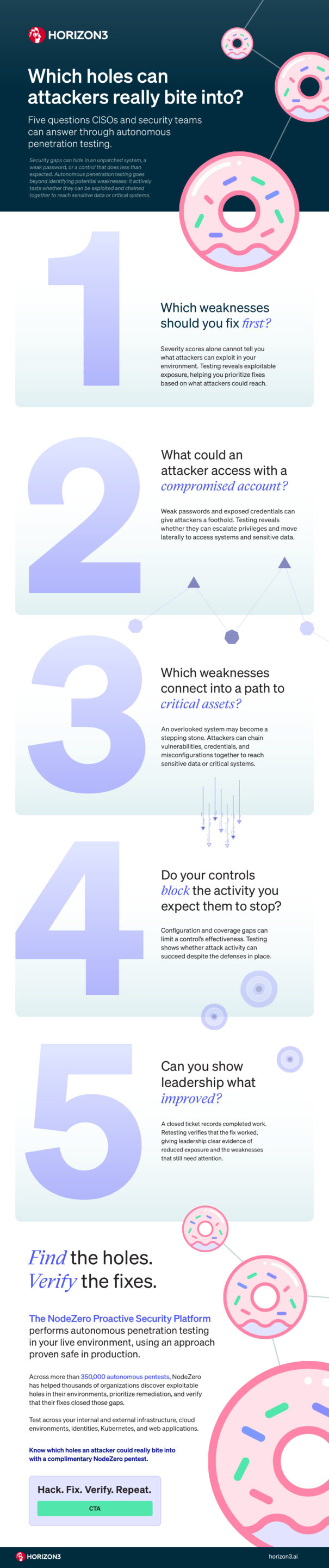
This infographic outlines five questions CISOs and security teams can answer through autonomous penetration testing.
Key Takeaways: Five Questions Testing Can Answer
- Which weaknesses should you fix first? Severity scores alone cannot tell you what attackers can exploit. Testing reveals exploitable exposure, helping you prioritize fixes based on what attackers could reach.
- What could an attacker access with a compromised account? Weak passwords and exposed credentials can give attackers a foothold. Testing reveals whether they can escalate privileges and move laterally to access systems and sensitive data.
- Which weaknesses connect into a path to critical assets? An overlooked system may become a stepping stone. Attackers can chain vulnerabilities, credentials, and misconfigurations together to reach sensitive data or critical systems.
- Do your controls block the activity you expect them to stop? Configuration and coverage gaps can limit a control’s effectiveness. Testing shows whether attack activity can succeed despite the defenses in place.
- Can you show leadership what improved? A closed ticket records completed work. Retesting verifies the fix worked, giving leadership clear evidence of reduced exposure and remaining weaknesses.
Why These Insights Matter
Together, these questions shift the conversation from what could be wrong to what attackers can actually do. Exploitable weaknesses, connected attack paths, control gaps, and verified fixes give leaders evidence to prioritize remediation and track real progress: find the holes, then verify the fixes.
Download the Infographic
Download the infographic to see all five questions and how autonomous penetration testing helps answer them.